
Tuatha Dé Danann
Origins and The Book of Invasions...

Tuatha Dé Danann
from ‘Early Music’
Spiritually inclined, we
were never to entertain
the bloody battle.
Our hearts quickened as
each shroud was broken
by serpentine bows.
Hollow hills beckon now,
they echo the slap of
Amergin’s warship
on wave.
We are the dream of Éibhle.
We are the lick of the stream
trickling, the reason
your senses heightened.
We keep you safe,
standing out among
the peoples.
We are the ones
who stood the stones
that stand still.
We watch the bloody battles
and pray for peace.
Our ancient inclination
descending through
a spiritual strain.
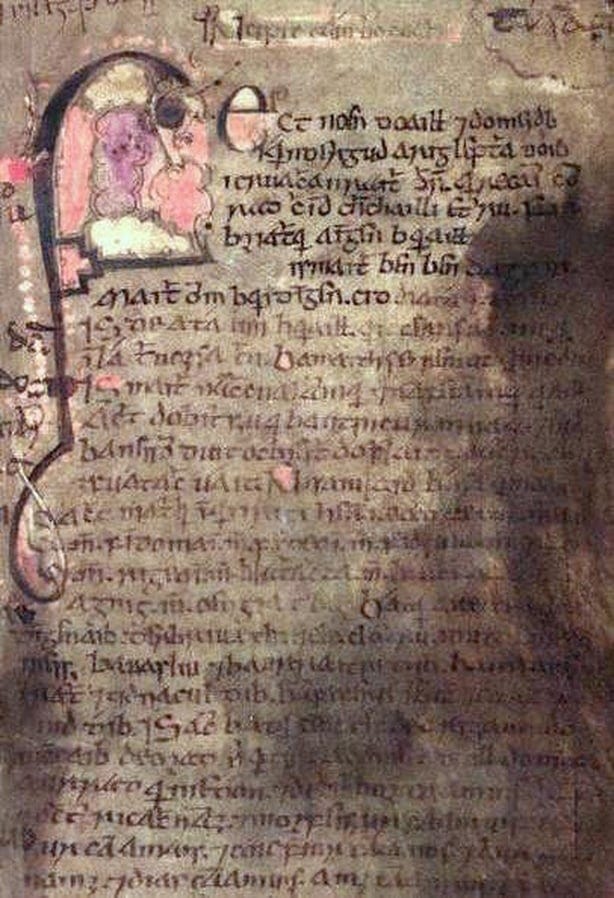
‘The Book of Invasions’, or the Leabhar Gabhála Éireann, is the earliest mytho-historical account of the origin of the Irish people. It is a cuttingly titled translation that bares insight into one of the foundational elements of societal change — human migration and the arrival of the other…
The Book of Invasions exists in many variant versions, in poetry and prose. The origins of these stories can be traced to the seventh century, although the earliest surviving manuscripts are much later. In the Leabhar Gabhála, the Tuatha Dé Danann are not exactly gods but deified ancestors… a divine race whose magic and memory live on under the Irish soil. The raths and hollow hills — Brú na Bóinne, Sídh Chnocc Bríde, Knocknarea — are their palaces, and when the wind moves through the grass, they are said to be riding still.
The Tuatha dé Danann, descendents of the goddess, Danu, were said to be a graceful and artistic race who arrived in Ireland after the fir bolg from Greece and the Partholonians. They are the shimmer between history and enchantment — the Ireland beneath Ireland.
